La soldadura MAG se utiliza comúnmente para el acero. piezas de chapa metálica que requieren uniones de alta resistencia y una producción eficiente a gran escala. Se trata de construir ensamblajes que mantengan su forma, soporten cargas y resistan el uso real.
Aquí es donde la soldadura MAG demuestra su superioridad en aplicaciones estructurales. Los marcos, soportes, bases y ménsulas de acero dependen más de una penetración uniforme y una fusión sólida que de una apariencia perfecta del cordón. MAG maneja excepcionalmente bien las uniones de filete y de esquina, que son precisamente los elementos con los que se construyen la mayoría de los ensamblajes estructurales de chapa metálica.
Se utiliza habitualmente en bastidores, soportes, estructuras y subconjuntos soldados donde se requiere resistencia y repetibilidad. El proceso tolera pequeñas variaciones en el ajuste de las juntas, inevitables en estructuras de acero de mayor tamaño, y aun así produce soldaduras fiables sin ralentizar la producción.
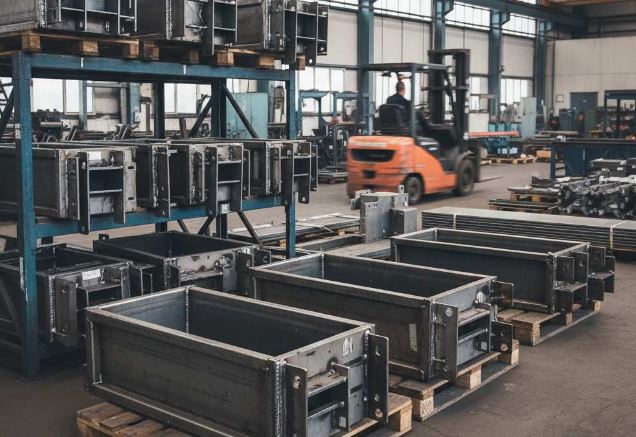
Cuando se observa una pila de gabinetes de acero dulce, gabinetes de control o protectores de maquinaria pesada, la prioridad es la resistencia mecánica y la integridad del gabinete, más que la apariencia de la soldadura. Estas carcasas generalmente se cortan, doblan y ensamblan en condiciones de producción, y MAG es lo que realmente mantiene la línea en movimiento. Proporciona la resistencia suficiente para soportar el peso de los componentes internos sin los problemas de sobrecalentamiento que se producirían con procesos más lentos. Es la solución ideal para fabricar una carcasa con la rapidez necesaria para ser rentable, garantizando al mismo tiempo que no se desintegre bajo vibración.
La soldadura MAG funciona bien en este caso porque equilibra la velocidad con una resistencia de soldadura adecuada. Los soportes y marcos suelen requerir múltiples soldaduras cortas en diferentes bordes, y la alimentación continua del alambre hace que estas operaciones sean eficientes sin paradas frecuentes. En entornos de producción, esto reduce el tiempo de mano de obra a la vez que mantiene una calidad de unión uniforme.
En estas aplicaciones, el acabado superficial no suele ser la prioridad. La resistencia, la alineación y la estabilidad dimensional son primordiales, lo que resulta ideal para la soldadura MAG.
En maquinaria pesada, la soldadura MAG es fundamental. No hablamos de revestimientos estéticos ni cubiertas decorativas; hablamos de los soportes, las estructuras de las cintas transportadoras y los paneles estructurales que mantienen unido el sistema. Estas piezas están sometidas constantemente a vibraciones y cargas mecánicas. Se utiliza soldadura MAG porque se necesita una fusión profunda y resistente que soporte un uso intensivo sin agrietarse. Al soldar la base de una máquina o una nervadura estructural, no se busca una obra de arte, sino una unión que se mantenga sólida como una roca durante los próximos diez años de funcionamiento continuo.
Estos componentes suelen estar sometidos a vibraciones, impactos y cargas repetidas. Las soldaduras MAG proporcionan la penetración y fusión necesarias para soportar esas condiciones sin un procesamiento posterior excesivo. El proceso también se integra fácilmente con soldadura automatizada, razón por la cual es común en la fabricación de equipos industriales de alto volumen.
 SUSCRÍBETE A NUESTRO BOLETÍN
WHATSAPP : +86-15375471059
Correo electrónico : allan@safekeso.com
Número de teléfono : +86 15375471059